Vaccine reactions in the news??!!

It has been all over my facebook feed today that Robert De Niro came out in defence of individualised medication. How scary is it that in this day and age, we’re not allowed to say that some medications will be good for some and not for others? Whether it’s paracetamol and antibiotics or vaccines, I don’t see how anyone could expect one drug to be safe for everybody. It’s like saying that because I can eat peanuts without any problems, it is perfectly safe to force feed a small child 1000 or more peanuts at a time.

My children did not become Autistic after a vaccination. I know that for a fact, because most of my children have not been vaccinated, and yet I still have four children on the spectrum. My second daughter had an adverse reaction to the two vaccines she received and we nearly lost her – as a result we have made the decision that vaccines in our case are not safe and carry more risks than getting the disease (which most of the time the vaccine doesn’t actually protect you from anyway). We do not rely on herd immunity, because we know that herd immunity does not work for vaccinated individuals and is not counting adults who are not up to date on their vaccinations. Instead we practice good hygiene, rely on a clean diet to keep our bodies healthy, and use alternatives to vaccines to help with symptoms of childhood illnesses.

Apparently some would see my children as cesspools of germs and disease, which they spread throughout the community and endanger other children simply by existing in an unvaccinated state. When my children had whooping cough (which by the way is not prevented by the vaccine) we stayed home so we didn’t get others sick. We were directly exposed to chickenpox by a friend who had it for the third time (interestingly enough she’d been vaccinated for it three times), yet none of us got chickenpox. If my son has a slightly runny nose or cough, I keep him home from school, so he does not spread his germs to others. I wish more parents would do that because I’ve often seen kids with green, snotty noses coughing and sneezing while still at school – regardless of your vaccination status, I don’t see how that can be healthy for anyone.

The day is coming (very soon) where our children will be no longer seen as our responsibility, but will belong to the government. The government will decide how we can give birth to them (and no doubt how many), what to feed them and to inject them with, how to school them, what jobs they should do and where they can live. Looks like George Orwell wasn’t that far off the mark.

Mandatory vaccinations are the beginning of a very slippery slope for humanity as a whole and I feel sad for those people who cannot see that.

Being an Autism Parent has taught me…

To cherish every little smile that is bestowed upon me.

That it’s okay to cry with happiness when your child actually looks you in the eyes.

How important it is to just be there – not doing, just being.

That Love is expressed in so many more ways than just through words.

The importance of nurturing my relationships and helping them to flourish – but only the ones that really count.

All is not always as it appears – especially when it comes to children having meltdowns in public places.

That sometimes you can feel so proud of your child that you might burst – even though they’ve only said one word.

How hard you have to fight to get your child the basic things in life.

That other people can be totally ignorant, clueless, self-centred, arrogant, rude and opinionated – and they don’t hesitate to share all that with you in front of your child.

To be grateful for sleep – any amount, anytime, anywhere.

The importance of what goes into a little person’s stomach – and how hard it is to get it in there in the first place.

That you can build up a tolerance to the smell, look and feel of poo – everywhere.

That other mothers on the same journey as you, make better friends, cheer squads, therapists, researchers, teachers, and marriage counselors, than anyone who you could actually pay to do those things for you.

Swinging your ‘Willy’ in someone’s face

naked-baby

I am having one of those days today where I don’t want to hear about Autism being ‘neurodiverse’ and needing acceptance. I don’t agree that society needs to change in all aspects in order to accommodate the needs of Autistic individuals – because those needs can be at odds with the needs of others and there is no way you can meet everyone’s needs at the same time. It’s impossible to provide personal playgrounds for every child – far enough away from anywhere that the noise sensitive individuals won’t get upset. Tax payers can’t afford to pay for inclusive classrooms with only two or three children and four or five specially trained teachers, being held at varying hours depending on the individual’s sleeping patterns. Freedom of personal expression for one person often involves curtailing someone else’s freedom.

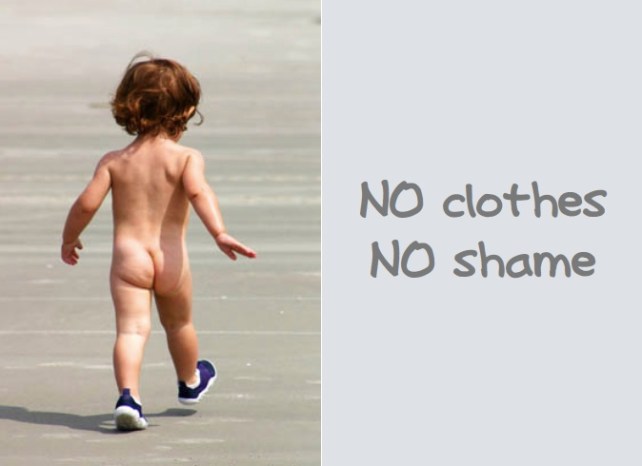
My son (like many other autistic children) loves to strip his clothes off. The sight of him sitting buck naked on his swing, flying high up in the sky with everything flying free, is not for the faint of heart. Should I just tell the parents at the playground that they should accept my son’s autistic preferences and how dare they question his sensory issues? What about when he is 16 or 36 and still feels the same – is he allowed to lie face first on the swing while naked and yell happily at the top of his lungs as he goes as high as he can, doing his froggy kicks?

Should it be generally accepted that when he feels the need, he can grab a handful of his poo and smear it on the wall in the shopping centre? Or throw it against the glass window of the shop to watch is splatter and slide down? Am I supposed to rejoice when he comes running up to me and wipes his poo over my clothes?

I don’t think the visitors of our local cemetery were impressed with the destruction of their loved one’s mementos on their grave sites, when my son expressed his pleasure at smashing things into a million pieces on one of his many absconding episodes. He feels a deep seated need for chaos and destruction – should my neigbours accept that as just being part of his Autism and let him destroy their property in the name of neurodiversity?

Please don’t tell me that we need to accept and embrace Autism. Accept the autistic individual – yes. Love and care for them as we would any other human being – yes. Provide them with the opportunities to grow and flourish in our society – yes. But accept Autism and the way it limits our children – no, I can never do that.

The embarrassment of Autism parenting

Last year we were able to combine a trip to see our biomedical doctor with a holiday, and see some sights along the way. It had been many, many years since we’d done that, and with Autism along for a ride, it’s not exactly a smooth trip. We were pretty well prepared for most things, but still managed to stuff up completely on one instance.

We went to Currumbin Wildlife Sanctuary, and took BuddyBoy along in his pram – something he objects to most of the time now but thankfully at the time he was happy to sit in it. We decided to go on a trip on the small train that goes on a track around the Wildlife park, and get off at the other end to see the exhibits there. What we’d failed to factor in was BuddyBoy’s love of riding trains (something we hadn’t done for ages), and when we got off the train, he had a full blown meltdown.

We were struggling with the pram, our bags, the other children to make sure they all got off the train and were following, as well as an extremely strong little boy who desperately wanted to go back on the train. He was kicking and screaming (very loudly) and we were too embarrassed to even look up at the other people around us. I just wanted to disappear into the ground – feeling as if everybody was judging our child and consequently our parenting. The other children were embarrassed, too, and we did the best we could to try and remove ourselves from public scrutiny, but it wasn’t easy. Especially with the loud screeching going on. Finally he calmed down and we stopped to take some deep breaths.

Conventional parenting wisdom tells you not to give in when your child has a tantrum, as otherwise they will continue to manipulate others with their behaviour in order to get what they want. An Autism meltdown however has nothing in common with a ‘normal’ child’s tantrum and all rules go out the window. We were fully prepared to take our son back on the train, but unfortunately that was not possible – it had been mobbed by a large group of Japanese tourists and no seats were available. No matter how hard you try to avoid meltdowns in public, there are times it’s just not going to be possible.

We do use key phrases like “first, then” to help him understand what we’re doing, as well as a visual timer card. These work well as long as you use them BEFORE the meltdown happens – during a meltdown, he is incapable of hearing us, let alone understanding us or using reasoning.

There are other times when we get strange looks – like when we used to be able to take our kids to the playground (something BuddyBoy no longer allows us to do). He loves swinging, so would head straight for his favourite swing, and if it was in use he would try to pull off whoever was on there so he could have a turn. Which people probably would find amusing if he was one or two years old, but not at age seven. We get dirty looks from the other parents (perfectly understandable) and then have to stand there, forcibly restraining our squealing son while explaining to him that he needs to take turns.

Many times we will not correct our son’s behaviours, when we would have corrected them with the other children. As his developmental age is not the same as his physical age, we tend to parent him at the lower age – which for his seven year old body is closer to a two year old intellect. The gap between the two is getting bigger as he is getting older, as his intellectual development is not keeping pace with his age, so the differences are much more visible in public now. No doubt the strange looks will increase as he gets older.

I’d like Autism Awareness to educate people on the behaviours they can expect to see in public from children like mine, not just on the ‘special gifts’ that some of these children have.

On Being a Parenting Failure

Many, many years ago, I had a vague idea in my head of what ‘successful parenting’ would look like. To me, it was something that could really only be measured when my children were grown and living independent lives – judging the success of my parenting by the decisions my offspring would make. I realise that there are personality characteristics inherent in everyone that influence their lives, but I still had some nebulous concepts of what would showcase my parenting success.

Once I started having children, I was very focussed on the day to day stuff – like making it through yet another sleep deprived day with a screaming and tantruming toddler, but I still thought about “when they were grown up”. I knew that they would need to learn certain skills in order to be able to function in our world, and live contentedly, regardless of what they chose to do with their futures. We started homeschooling when our oldest child was four and a half, and teaching lifeskills has always been a priority for me since.

The only trouble seems to be that my kids don’t want to learn them. Nobody likes to spend time cleaning up or cooking meals when there are more fun things to be done instead, but it’s a part of life that we need to do them. Just like personal cleanliness – I understand that sensory issues mean that having a shower or washing your hair is not something you’d willingly do, but the rest of us really don’t want to smell you or look at you when you haven’t done it. So who is ‘right’ in that instance? The one who says, “it’s my body and I can’t stand the feel of the water on my skin”, or the one who says, “it’s my nose and I can’t stand the smell of you as it makes me feel nauseous”?  Surely there can be a compromise?

Then there is the Obsessive Compulsiveness that means every single thing has to be kept and can never, ever be thrown out. Old lolly wrappers, envelopes from letters long lost, bits of feathers from pet birds (though not even being sure which one), bits of rocks and broken shells, and a scrap of paper with nothing on it, but it must be important somehow – all these are amongst the many treasures that several of my children feel it absolutely necessary to keep for eternity. I have sensory issues, too, as well as compulsions of my own. I learned long ago that visual clutter makes my brain feel cluttered, so in order for me to function better and feel emotionally capable, I need to have a relatively tidy house with things behind closed doors.

I have literally managed to stumble through one of my children’s rooms only to have a full blown panic attack when seeing the ‘stuff’ that was all over the floor, the furniture and hanging out of the cupboards. I know that I am the one that has to go through and organise it – throw things out, store the treasures and do it in such a way that the child can continue with the system themselves. Only they never do. Not ever. I am a fabulous organiser, yet I have failed at instilling in my children the most rudimentary of organisational skills – because they simply don’t care. I’ve tried to get them onto organisational apps and other tools that I think might suit their interests – “no thanks, I’d rather be messy”.

Being a Christian, I also have certain expectations of my children as human beings. Yelling abuse at their siblings, hurting them and breaking things don’t really fit into those expectations. I find it difficult to cope with the at-times constant arguments, the explosive tempers that my children have, and the extreme stubbornness that leads to school refusal (even though we homeschool) or to do anything as simple as helping clean up their own mess (and woe forbid if I ask them to clean up someone else’s mess).

I find it exhausting to have to constantly follow a child around, reminding them to do their (very few) chores, or to have a shower, or to eat something, or to go to bed (oh, that’s a favourite one in this house). I have tried visual charts, I have tried Chore Packs (clip on cards with ordered chores to do such as brushing teeth), I have tried rosters. I have tried explaining, begging, pleading, guilt trips, paying them and yelling at them. Nothing works.

So looking at the likelihood of my parenting having raised some healthy, capable individuals, ready to cope in our society, I have to admit to a huge FAIL.

My oldest ‘child’ at 19 does not want to leave the house, talk to people, eat or sleep. I have no idea how she will ever cope in an employment situation, or any other situation that puts her in daily contact with the outside world. My second child is coping extremely well, except for the pressures that living in a house with four autistic siblings put on her mentally and physically. She has not had a normal childhood by any stretch of the imagination. My third child is the one refusing to do schoolwork and spends most of her time on the computer, regardless of what I say or do. My fourth child is doing well but has decided that what’s good enough for her older sister is good enough for her, so she is not doing schoolwork either. And please don’t ask her to have a shower or brush her hair. My youngest has an explosive temper that needs to be managed very carefully at all times, and I have wondered whether he has Pathological Demand Avoidance. And then there’s my autistic son, who needs 24/7 watching and care.

At the beginning of my parenthood journey, I had thought that someday I might be able to enjoy some ‘child-free’ time with my husband once the kids had left home, and maybe even have a few grandchildren. The reality is that we will always have at least one child at home – and regardless of how old he is, he will most likely remain a child in intellect and behaviour for the rest of his life. I don’t know whether the others will be able to cope in the world without our help, either. Child-free time would require the money to pay a carer – a luxury we simply cannot afford when we are struggling to put food on the table. The only one of my children who might like to marry one day is too afraid of having severely ill children, so the chances of my having any grandchildren are pretty slim.

No matter who I talk to, I am confronted with advice that totally contradicts my personal feelings, instincts and abilities. We used to attachment parent – much to the dismay of some Christian parents. We also tried ‘tough love’ as recommended by our pastor at the time – this backfired completely with the kids and left me feeling absolutely horrible as a parent. We did the usual daycare, preschool/school thing, only to find out that it simply didn’t suit our child. Then we were harassed by the various government departments and ‘professionals’ we were consulting at the time (none of whom ever mentioned the word Aspergers to us) as obviously all our issues were due to homeschooling. This was right after we were told that our oldest child had possible Attachment issues and we should work on that.

On the one hand I am told that my children need lots of exposure to the ‘world’ (aren’t we living in it already?) and that I’m not forcibly dragging them out enough to make them endure socialisation. At the same time, I should be cognizant of their sensory and emotional needs and not put too much pressure on them. Each child should apparently be receiving special attention, therapy and a whole heap of other things, which are simply not possible when you have six children and only one full time parent, as well as a budget that has been stretched beyond breaking point already. I’m their case manager – it is up to me to coordinate therapies, financial assistance (ha ha ha) and anything else they may need, as well as provide therapy at home, ensure a nutritious diet and that they are taking their supplements.

Is it any wonder I feel like an absolute failure? The pressure put on parents of children with Autism is huge – not just from within ourselves, but from well meaning friends, relatives, school teachers, and any professional we consult on behalf of our child. Add in the fact that a lot of us have health issues of our own which are exacerbated by the constant stress we live in, and it’s truly a miracle that we manage to survive each day.